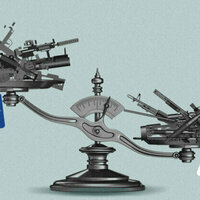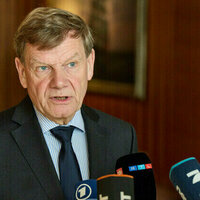


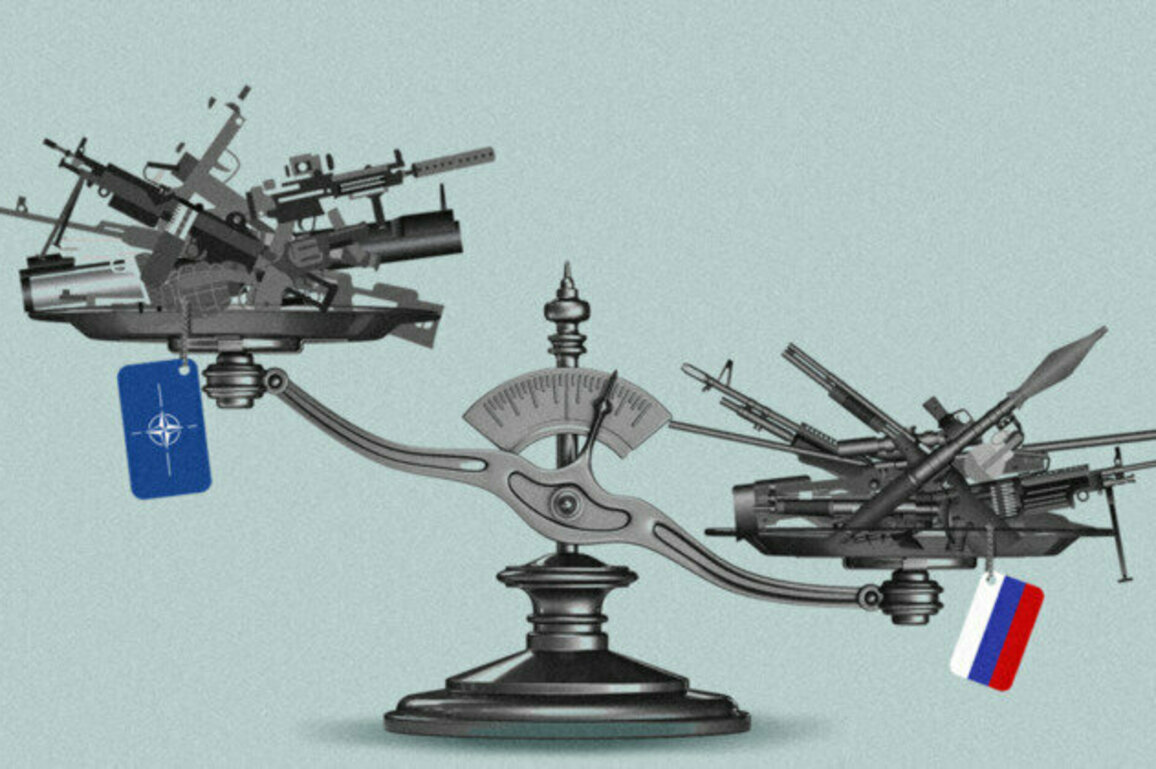
Russia is now producing three times as much ammunition in three months as the whole of NATO is doing in a year, NATO Secretary General Mark Rutte recently told theNew York Times.
RFE/RL and the Conflict Intelligence Team (CIT), an open-source intelligence group, analyzed Russian and Western weapons production to assess whether Russia really has such a large production advantage over the US and its allies and in which categories of weapons -- artillery, ammunition, tanks, aircraft, missiles, and drones, and air defense -- each side has the upper hand.
Fact Or Exaggeration? NATO vs. Russian Artillery Shell Production
It wasnt the first time Rutte claimed Russia is far outpacing NATO artillery production. In April hetold CBSin an interview that Russia is producing four times more in ammunition than the whole of NATO is producing in a year.
Ukrainian and Western officials estimate that Russia produced some 22.3 million artillery shells in 2024, an increase from an estimated 1.25 million in 2022, as Russiainvests in expandingits production capacity.
The US, meanwhile, planned to increase its production of 155mm shells to 1.2 million annually by the end of 2025, with Europe producing approximately the same number -- Germany'sRheinmetall aloneplans to produce up to 700,000 per year -- according to conservative estimates.
Actual US production of the shells stands at40,000 per month, or just shy of half a million per year, for a total of about 1.7 million shells made this year in the US and EU.
For Russia to make three times as much every three months, as Rutte said, its factories would have to produce a massive 20.5 million shells this year.
According to CITs analysis, Russias factory expansions inBiysk,Kazan, and other locations may allow it to produce some 4 million 152mm and 122mm shells per year.
Shells Need Guns
Russia still relies heavily on its stock of Soviet-era artillery systems to fire the shells it produces, with reserves of towed howitzersfallingfrom around 12,000 in 2022 to just over 6,000 in mid-2024. CIT analysts assess that the country produces less than 100 new Msta-S, Giatsint-K, and Malva self-propelled howitzers per year.
NATO clearly has the upper hand here, with Franceplanning to produce144 CAESAR artillery systems in 2025 and Polanddoubling productionof its AHS Krab to 100 per year. Slovakia isexpectedto make 40 Zuzana howitzers and the USproduces216 cannon tubes for its M777 guns annually.
Number Of Artillery Systems Produced Annually
Heavy Hitters
One area where Russia likely has the upper hand is tanks.
Like artillery, much of its tank production comes from restoring and modernizing Soviet tanks from storage. This would be the bulk of the 1,500 tanks Christopher Cavoli, NATOs previous Supreme Allied Commander Europe, expects the Russian army toreceive in 2025.
However, it has ramped up production from scratch of its modern T-90M main battle tank, producing about280 per year.
Most countries in Europe, on the other hand, barely produce tanks. France hasnt made a Leclerc in more than a decade, while Britain has ordered 148 of its new Challenger 3 tanks to be delivered by 2030. Germany is the exception, making 50 Leopard 2A8s per year.
The US produces 109 M1A2 Abrams tanks annually -- the Army says this could be increased to 420 if necessary -- and also modernizes up to 200 older models.
Chart: Number Of Tanks Produced Annually
Air Superiority
While Russia makes more tanks, the US and EU outproduce it by at least a factor of four when it comes to combat aircraft. Russia can make anestimated 50-60per year, including multirole aircraft like the new Su-57 and strategic bombers like the Tu-160M2. Despite sanctions, the country is making more planes than before its invasion of Ukraine. In 2018, the Russian military received36 combat aircraft.
NATO production, though, is much higher, with US manufacturer Lockheed Martin on track to deliver over170 F-35 strike fightersthis year in addition to France, Sweden, and other EU countries making dozens of Rafale, Eurofighter Typhoon, and Gripen jets.
Chart: Number Of Combat Aircraft Produced Annually
Air Defense
As Russia launches barrage after barrage of missiles at Ukraine, and Ukrainian drones strike ever deeper into Russia, production of air defense systems has come into the spotlight.
According to The Military Balance, an annual assessment of military capabilities worldwide, Russia had248 S-400 batteriesin 2024 and gained a further 18 in 2025, implying a production capacity of 36 per year. Production of its other systems, like the Tor, Buk, and Pantsir are hard to come by.
Raytheon builds some12 Patriotmissile-defense systems per year, while Germanys Diehl plans to make 8 IRIS-T systems in 2025 and some 800-1,000 missiles for the system per year. NATO also produces the Norwegian-American NASAMS system, which can use AIM-120 AMRAAM or AIM-9X missiles. The US produces1,200and2,500of each missile per year, respectively.
Number Of Air-Defence Systems And Missiles Produced Annually
A lack of data makes it difficult to assess definitively how many air defense systems and missiles are produced by each party, but with both Ukraine and Russia regularly suffering hits from primitive drones, it seems clear that current rates are not enough to protect either country from a major new feature of the war that is here to stay: cheap mass-produced strike drones.
Drone Wars
According to Ukraine, Russia produces some 5,000 long-range drones of various types each month, or 60,000 per year. This includes the Geran-2 strike drone (a Russian version of Irans Shahed) and the Gerbera, a drone without a warhead used as decoy to saturate Ukraines air defenses.
NATO does not currently make anything analogous to these cheap kamikaze drones, with the US opting for much more expensive Reaper and Global Hawk UAVs.
Russia also makes over 200 cruise and ballistic missiles per month, according to UkrainesHUR intelligence agency, with annual production in the range of 2,400-3,000 missiles. The US produces anestimated 700JASSM cruise missiles and500 ATACMSballistic missiles per year.
Chart: Number Of Drones And Missiles Produced Annually
This gives Russia the advantage in both kamikaze drones and cruise missiles.
In the event of a war between Russia and NATO, NATOs air defenses would be in a better position to neutralize the drone threat than Ukraine's air defenses, which have suffered from a lack of fighter jets since the beginning of the invasion, CIT analysts say.
While it has an advantage in missile production, Russias air defenses, struggling against primitive Ukrainian drones, would likely have a hard time protecting the countrys airspace from NATO missiles.